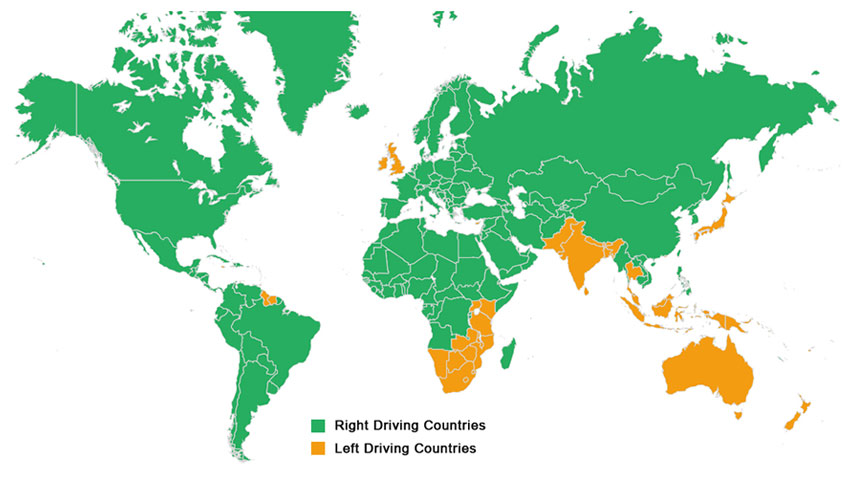
In Ireland, we drive on the left. We know this. It's normal to us. It is also, statistically speaking, the minority position. About 65% of the world's countries drive on the right. We're in the smaller camp, along with the UK, Japan, Australia, and a long list of mostly former British colonies.
But how did this happen? Why does anyone drive on the left? And if you're heading abroad, which countries are on your side and which will have you white-knuckling the steering wheel on the "wrong" side of the road?
Blame the Romans
The left-hand side of the road has been the default for longer than cars have existed. Historians trace it back to the Romans, who drove their chariots on the left. The reason was practical: most people are right-handed. If you're riding on the left and an enemy approaches from the opposite direction, your sword hand (the right) is closest to the threat.
It wasn't just Romans. Medieval knights, samurai in Japan, travellers across Europe for centuries. Left was the safe side, because your weapon arm faced the oncoming traffic. Which is a sentence that makes driving on the M50 sound almost civilised by comparison.
How Britain Made It Official
For centuries, left-side travel was just custom. Britain formalised it in 1835 with laws requiring all traffic to keep left. Then came the Empire.
As Britain colonised large chunks of the world, it brought its road rules along. India, Australia, much of East Africa, the Caribbean islands. All inherited left-hand driving from Britain. When the colonies became independent nations, most kept it.
Japan is an interesting case. The Japanese drove on the left long before Britain showed up, a tradition linked to samurai carrying their swords on the left hip. But when Japan built its railway system in the 1870s, British engineers helped design it, reinforcing the left-side convention for road traffic too.
Indonesia and Thailand also drive on the left, each for their own historical reasons.
The Switchers
Not every country that started on the left stayed there.
Canada switched to right-hand driving in the 1920s. The reason was simple: the United States, its enormous neighbour, drove on the right. Having different road rules at the border was a nightmare.
Sweden made one of the most dramatic switches in history. On 3 September 1967 (known as Dagen H), the entire country switched from left to right at 5am on a Sunday morning. Every car on the road stopped, moved to the other side, and started again. Remarkably, it worked.
Other former colonies switched to match their right-driving neighbours over the decades. The trend has been toward right-hand driving globally. But nobody who currently drives on the left seems interested in changing. Including us.
The Car Thing
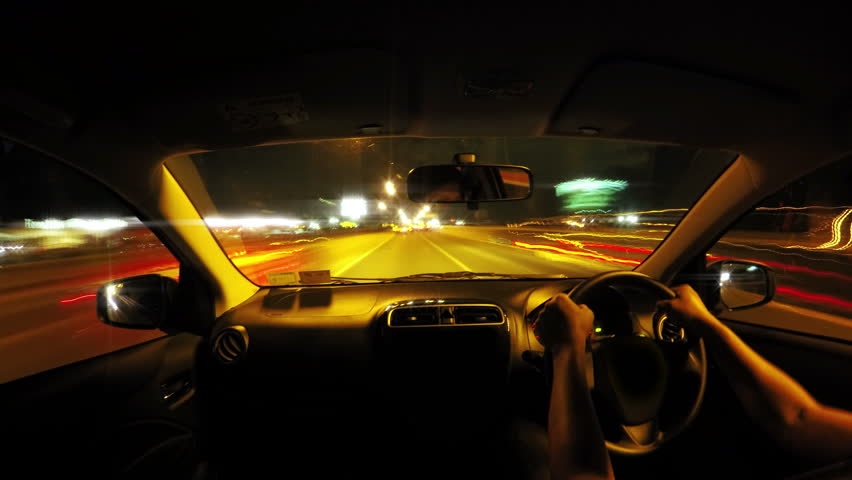
Here's a detail people forget: the side of the road determines the side of the car. Countries that drive on the left have the steering wheel on the right side of the vehicle. This puts the driver closer to the centre of the road, giving better visibility for overtaking.
If you're renting a car abroad in a country that drives on the opposite side, the steering wheel position is often the hardest adjustment. Everything is backwards. Indicators and wipers are swapped. Your instincts are wrong for the first day. Possibly the second.
The Full List
Countries and territories that drive on the left account for roughly 35% of the world. If you're not on this list, you drive on the right.
Anguilla, Antigua and Barbuda, Australia, Bahamas, Barbados, Bermuda, Bhutan, Botswana, British Virgin Islands, Brunei, Cayman Islands, Christmas Island, Cocos (Keeling) Islands, Cook Islands, Cyprus, North Cyprus, Dominica, East Timor (Timor-Leste), England, Eswatini, Falkland Islands, Fiji, Grenada, Guernsey, Guyana, Hong Kong, India, Indonesia, Ireland, Isle of Man, Jamaica, Japan, Jersey, Kenya, Kiribati, Lesotho, Macau, Malawi, Malaysia, Maldives, Malta, Mauritius, Montserrat, Mozambique, Namibia, Nauru, Nepal, New Zealand, Niue, Norfolk Island, Northern Ireland, Pakistan, Papua New Guinea, Pitcairn Islands, Saint Helena, Saint Kitts and Nevis, Saint Lucia, Saint Vincent and the Grenadines, Samoa, Scotland, Seychelles, Singapore, Solomon Islands, South Africa, Sri Lanka, Suriname, Tanzania, Thailand, Tokelau, Tonga, Trinidad and Tobago, Turks and Caicos Islands, Tuvalu, Uganda, United Kingdom, United States Virgin Islands, Wales, Zambia, and Zimbabwe.
The Takeaway
Before you drive in another country, check the list. It sounds obvious, but plenty of people have landed in Barbados or Bermuda expecting to drive on the right and got a nasty surprise at the first junction.
If you're Irish, most of the English-speaking world drives on the same side as you. The big exceptions are the United States, Canada, and most of continental Europe. Go to France, Spain, or Germany and your instincts will be wrong. Go to the UK, Australia, or India and you'll feel right at home.
Well. On the correct side of the road, at least. Feeling at home in Mumbai traffic is another matter entirely.