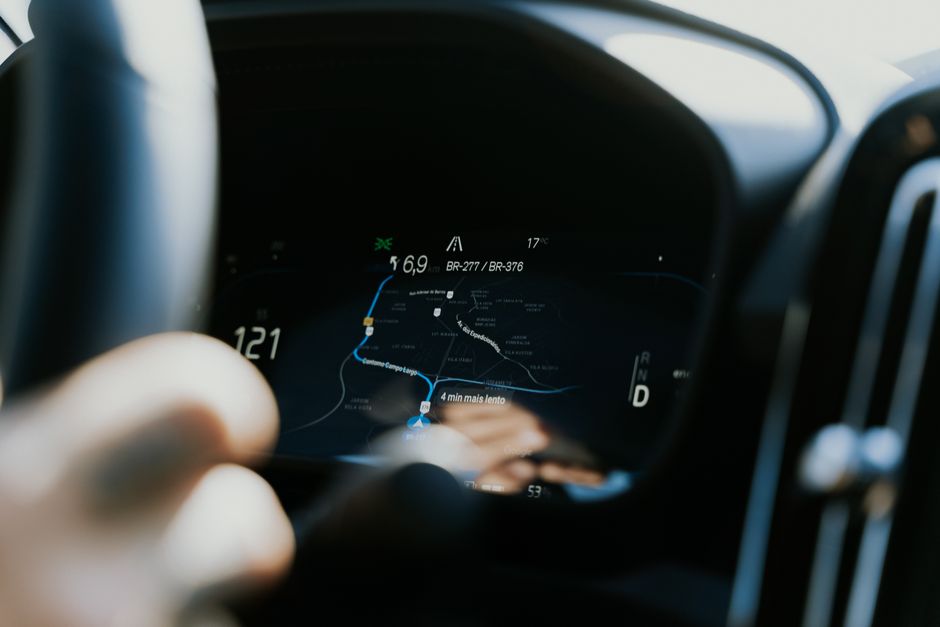
You turn the key, the screen lights up, and before you've checked your mirrors there's a BMW logo, a software update notification, and a tile that looks suspiciously like a sponsored result. You're not at a bus stop. You're in your own car.
That moment is no longer hypothetical. Manufacturers including BMW, General Motors, and several Chinese OEMs are actively building advertising and subscription frameworks into their infotainment systems. What starts as a branded loading screen or a "suggested" destination in your navigation is the thin end of a very long wedge. Irish drivers need to know what's already here, what's coming, and what it means for them.
What Manufacturers Are Actually Doing
BMW made headlines when it began locking features like heated seats behind subscription paywalls. General Motors went further, partnering with data brokers to sell driver behaviour profiles until a backlash forced a partial retreat. A 2023 investigation by Mozilla found that modern cars are among the worst product categories for privacy, collecting data on location, braking habits, music preferences, and even voice commands.
The advertising angle is the next step. If your car knows your daily route, your fuel preferences, your coffee stop on the M7, and the fact that you slow down outside a particular filling station every Thursday, that data is worth money. A lot of money. Stellantis executives have publicly discussed in-vehicle advertising as a future revenue stream. Amazon's Alexa integration in vehicles already feeds a data pipeline. This is not speculation. It's a business model being built in plain sight.
The Distraction Problem Nobody Wants to Talk About
There's a road safety issue sitting in the middle of all this that tends to get buried under the tech excitement.
Distracted driving is already a serious problem on Irish roads. Any additional visual stimulus on a central display, even a static banner, increases cognitive load. The RSA's own figures consistently show driver inattention as a leading factor in serious collisions. A notification ping from a sponsored navigation suggestion is not categorically different from a glance at your phone. The screen is just closer to your eyeline and dressed up with the manufacturer's logo so it feels legitimate.
Advertising is designed to capture attention. That is its entire job. Putting it in a vehicle cabin is not a neutral act.
What It Means for Your Privacy
Modern connected cars transmit data continuously. Your infotainment system logs where you go, how fast you accelerate, whether you use voice commands, and what music you play. Under GDPR, Irish and EU drivers have more protection than their American counterparts, but the framework is being tested by manufacturers who present data collection as a condition of software features.
Read the terms before you connect your car to any manufacturer's connected services. Buried in the consent flow is often permission for "personalised services," which is the polite phrase for targeted advertising. Opting out may mean losing features you assumed were standard. That's a deliberate design choice.
Your data is also linked to your VIN. That means it follows the car, not just you. A future buyer of your 2024 BMW 5 Series may be inheriting a profile built on your driving behaviour.
The Resale Value Angle
This one is underappreciated. There are already hidden costs to buying certain vehicles that dealers won't spell out. In-car advertising and subscription-gated features add a new layer.
If a vehicle's infotainment experience degrades over time because the manufacturer stops supporting certain services, or because ad placements become more aggressive as the software matures, that affects the used car appeal of the vehicle. A 2024 vehicle with a cluttered, ad-interrupted interface in 2028 is a harder sell than one with a clean, functional screen. Buyers notice. Dealers will adjust valuations accordingly, quietly.
Features locked behind subscriptions present a related problem. A car listed with "heated seats" that require a monthly fee to activate is not the same as a car with heated seats. That distinction will eventually be reflected in private sale prices, even if the main dealers don't advertise it that way.
What You Can Do Right Now
You're not powerless here, but you have to be deliberate.
Before you buy: Ask specifically which features require ongoing subscriptions and which are included outright. Get it in writing. Check whether the manufacturer has a history of changing terms after purchase, because several do.
After you buy: Go into your privacy settings on the infotainment system and turn off data sharing options. Most manufacturers bury these under multiple menus. Look for "connected services," "data sharing," or "personalisation." Decline what you can.
When connecting services: Don't link your Google or Apple account to the car's native system unless you need to. Use your phone's own CarPlay or Android Auto instead. These have their own privacy issues but they keep the data stream separate from the manufacturer's pipeline.
When selling: Factory reset the infotainment system before handover. This is the equivalent of wiping a phone before you sell it. Your location history, saved addresses, and connected accounts should not travel with the car to its next owner.
The Bigger Picture
The car is becoming a platform. That's the phrase manufacturers and their investors use. What it means in practice is that the vehicle you buy is increasingly a delivery mechanism for ongoing revenue extraction, through subscriptions, data sales, and eventually advertising.
For most Irish drivers this feels remote. You bought the car, you own the car, the car is yours. That logic is becoming less accurate with every software update. The connected car operates more like a smartphone on a finance agreement than a piece of outright property.
The startup screen that flashes a BMW logo for four seconds longer than necessary is not a glitch. It's a billboard. And unlike every other billboard on your commute, this one is inside your car, and it knows exactly where you're going.
You turned the key, the screen lit up, and someone else was already in the passenger seat. Worth knowing that before you sign anything.