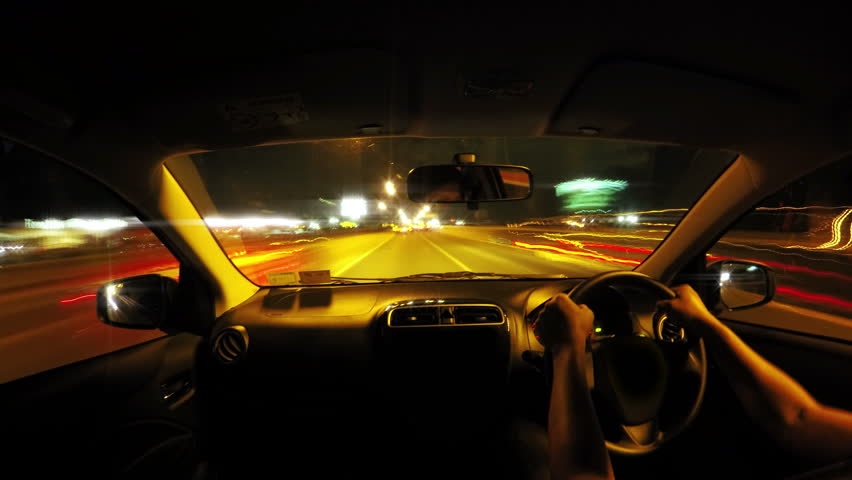
Nobody loves driving at night. New drivers dread it. Experienced drivers tolerate it. And anyone who says they actually prefer it is either lying or hasn't done the M7 at midnight in November rain.
The reality is simple. You can see less. You're more tired. Other drivers are more tired. Weather makes everything worse. Night driving is a leading cause of road accidents in Ireland, and most of the reasons come down to visibility and fatigue. Two things you can actually do something about.
Here's what works.
Get Your Headlights Right
Turn them on early. The moment you're squinting even slightly, your lights should already be on. And keep the lenses clean. A layer of road grime on your headlights can cut their output dramatically. Five seconds with a cloth before you set off. That's all it takes.
Full beam is yours to use on dark rural roads where there's nobody coming. The moment you see oncoming lights, dip. Not when they're close. When you first see them. Dipping late is the nighttime equivalent of tailgating: everyone hates the person who does it, and it's genuinely dangerous.
If someone doesn't dip for you, resist the urge to flash back. Slow down, look to the left edge of the road, and use it as your guide until they pass. Your eyes will recover in a few seconds. Getting into a high-beam standoff helps nobody.
Don't Stare at Oncoming Lights
Your eyes are drawn to bright things. That's biology. But staring into oncoming headlights wrecks your night vision and leaves you half-blind for the seconds afterwards. Train yourself to look slightly left, toward the road edge or the white line. Let your peripheral vision handle the oncoming car.
This takes practice. It feels unnatural at first. But it's one of the most important night driving habits you can build.
Kill the Light Inside the Car
Dim your dashboard. Switch off the map light. Turn down the phone brightness or, better yet, put it away. Any light source inside the car makes it harder for your eyes to adjust to the darkness outside. You want the cabin as dark as reasonably possible so your forward vision stays sharp.
If your passenger needs to check a map or a phone, ask them to keep it low and brief. Your eyes are doing the work here. Protect them.
Clean Your Mirrors
Dirty mirrors scatter headlight reflections into a diffused mess that's half glare, half blur. Clean wing mirrors and a clean rearview mirror give you crisp images of what's behind you without frying your retinas.
While you're at it, adjust the rearview to its night setting if it has one. Most modern cars have a tab underneath the mirror that tilts it to reduce glare. Use it.
Stay Sharp
Night driving eats concentration. Your body wants to sleep. The road is monotonous. The heater is on. Everything conspires to make you drift.
So strip away the distractions. The deep conversation can wait. The phone goes in the glovebox. Eating a bag of chips while navigating a dark N road is not multitasking. It's a recipe for ending up in a ditch.
If you're the driver, drive. Everything else is secondary.
Take Breaks (Real Ones)
Fatigue is not a problem you can push through. If your eyes are heavy, if you're yawning every thirty seconds, if you can't remember the last two kilometres, you need to stop. Not "soon." Now.
Pull into the next petrol station. Get out of the car. Walk around. Get a coffee. Splash cold water on your face. If you're properly exhausted, find somewhere to sleep. A hotel room. A safe car park with the seat reclined. Nobody ever regretted stopping too early on a night drive. Plenty of people have regretted not stopping at all.
Slow Down
This one's obvious but bears repeating. At night, your headlights illuminate a fixed distance ahead. If you're driving faster than your ability to react to something in that lit zone, you're driving too fast. Full stop.
Keep extra distance from the car ahead. Tailgating at night is worse than during the day, because the light bouncing off their rear end messes with your depth perception.
Drop the speed. Increase the gap. You'll arrive ten minutes later and alive.
Leave the Sunglasses at Home
It sounds too obvious to mention, but people do it. Dark or tinted glasses at night reduce your already-limited visibility even further. If you wear prescription glasses, make sure the lenses are clean and have an anti-reflective coating. It makes a genuine difference.
Night driving will never be pleasant. But it doesn't have to be dangerous. Clean lights, clean mirrors, slow speeds, regular breaks. None of it is complicated. All of it matters.