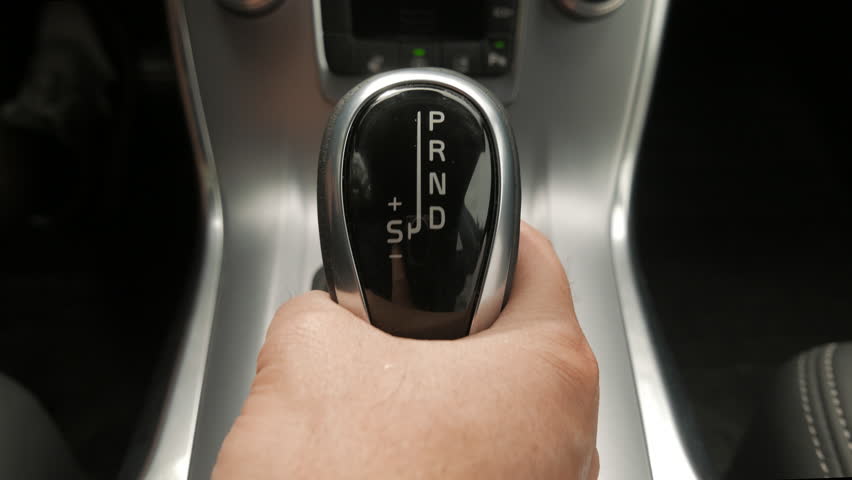
Look inside a manual car and you'll see three pedals and a gear stick. Look inside an automatic and there are two pedals and a selector that says P, R, N, D. That's it. No clutch. No gear lever. You put it in Drive, press the accelerator, and off you go.
Which raises a fair question. If there are no gears to change, what's actually happening under the bonnet?
Quite a lot, as it turns out.
What Transmission Does
Your engine spins fast. Really fast. Between 500 and 7,000 revolutions per minute, depending on how hard you're pressing the accelerator. Your wheels need to spin much slower than that, somewhere between 600 and 1,800 RPM.
The transmission is the bit in between. It takes the raw power from the engine and converts it into the right amount of force (torque) at the right speed for the wheels. Too much power, too fast, and you'd be uncontrollable. Too little and you wouldn't make it up a hill.
In a manual car, you manage this yourself by choosing gears. In an automatic, the car handles it for you. Same job. Different operator.
Gear Ratios (The Simple Version)
Gears have teeth. Small gears have fewer teeth. Big gears have more. When a small gear turns a big gear, the big gear moves slower but with more force. When a big gear turns a small gear, the small gear moves faster but with less force.
That's a gear ratio. A gear with 10 teeth driving a gear with 20 teeth gives you a ratio of 0.5:1. The output gear turns once for every two turns of the input gear. Slower, but stronger.
Your car uses different gear ratios for different situations. Low gears (high ratios) for pulling away from a stop or climbing hills. High gears (low ratios) for cruising on the motorway. In a manual, you choose. In an automatic, the car decides.
How the Automatic Gearbox Decides
This is where it gets clever.
The heart of an automatic gearbox is the planetary gear set. Picture a central gear (the sun gear) surrounded by smaller gears (the planet gears), all enclosed inside a larger ring gear. By locking and unlocking different parts of this set, the gearbox can produce different gear ratios without physically swapping gears in and out. Everything stays in place. The combination changes.
The switching is controlled by fluid pressure. Hydraulic fluid, pushed through channels and valves, activates clutches and bands inside the gearbox that lock the right components at the right time. Modern automatics use electronic sensors and a computer to fine-tune the timing. The result: smooth, seamless gear changes you barely notice.
The Torque Converter
In a manual car, the clutch connects and disconnects the engine from the gearbox. Press the clutch pedal and the engine spins freely. Release it and the engine's power flows to the wheels.
An automatic car has no clutch pedal. Instead, it has a torque converter. This is a sealed unit filled with hydraulic fluid, sitting between the engine and the gearbox.
Inside are two main components. The impeller is connected to the engine and spins with it, pushing fluid outward. That fluid hits the turbine, which is connected to the gearbox, and makes it spin too. The power transfers through the fluid, not through a direct mechanical connection.
This is why an automatic car doesn't stall. At low speeds or when stopped, the fluid coupling simply slips. The engine keeps running, the wheels stay still, and nobody panics at the traffic lights.
Why This Matters for Drivers
You don't need to understand planetary gear sets to drive an automatic. Nobody's going to quiz you on torque converter theory at the test centre.
But knowing what's happening underneath helps you understand why automatics behave the way they do. Why there's a slight delay when you floor it (the gearbox is dropping down a ratio). Why the car creeps forward in Drive with your foot off the accelerator (the torque converter is still transmitting a small amount of power). Why the car feels different in different driving modes.
The automatic gearbox is doing the same job you'd do with a manual. It's just doing it faster, smoother, and without the stalling. The engineering underneath is genuinely impressive. All you have to do is point the car and drive.