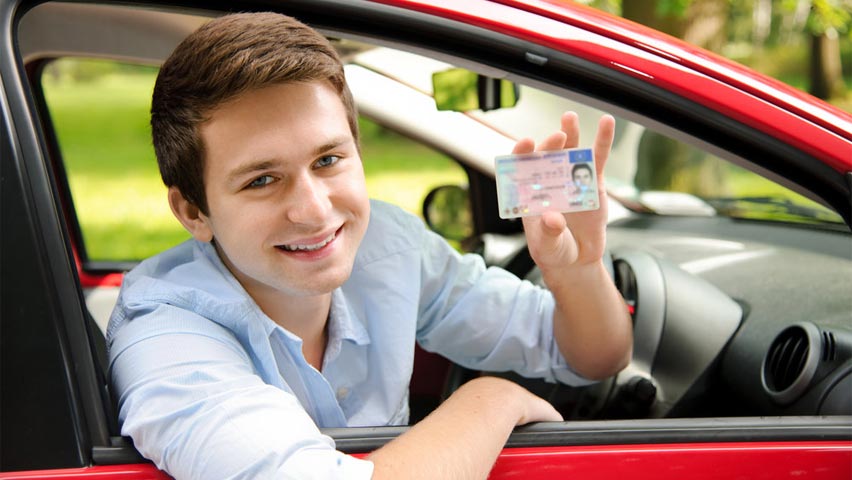
Before you can learn to drive in Ireland, you need a learner permit. Before you can get a learner permit, you need a small mountain of paperwork. This is Ireland. Paperwork is how we show love.
The permit is your legal right to sit behind the wheel as a learner. You must carry it every time you drive. Without it, you're not learning. You're just driving illegally with L plates on.
Here's how to get one without losing your mind.
Step one: pass the theory test
You cannot apply for a first learner permit without a driver theory test certificate for the vehicle category you want to drive. Book it, study for it, pass it. The certificate is valid for two years from the date you pass, so don't sit on it. If you let it expire before applying for your permit, you're doing the whole thing again.
Step two: gather your documents
You can apply online (if you have a Public Services Card and a verified MyGovID account) or in person at one of the 34 NDLS centres around the country. Either way, you'll need to prove three things: who you are, where you live, and that you have a PPS number.
Proving who you are. Irish citizens need a current identity card or certificate of naturalisation. If you're not Irish, bring a current passport, valid UK passport, or EU identity card. If you came to Ireland on travel documents, bring those.
Proving where you live. A recent utility bill (electricity, broadband, television) will do. So will a bank statement, a letter from Revenue, or correspondence from an Irish insurance company or national agency. The point is to confirm you're resident in Ireland for at least 185 days a year. Students and frequent visitors may also qualify, depending on their circumstances.
Your PPS number. Available from your Public Services Card, a payslip, or a medical card. If you don't have one, sort that out first.
Step three: the application itself
If you go in person to an NDLS centre, there's no separate form to fill out. They capture your details, photograph, and signature at the appointment. If you apply online through MyGovID, the system walks you through it step by step.
Either way: make sure everything is accurate. Providing false information is a criminal offence. Not a fine. A criminal offence.
The fee is €45. If you're 70 or over, it's free.
Medical and eyesight reports
Most first-time applicants won't need a medical report. But you will need one if:
- You're applying for the first time and you're 70 or over
- You have any form of disability
The report must be filled out by a registered doctor, and you sign it in the doctor's presence.
Eyesight report. This needs to be completed by a qualified optician. If you've already submitted a medical report, you may not need a separate eyesight report unless the doctor recommends one. Renewal applicants whose health information is already on file with the NDLS are also exempt.
If you lose your permit
Go to your nearest Garda station first. You'll need a loss confirmation and stamp of proof before you can apply for a replacement. Don't just leave it. Driving without a valid permit is the kind of problem that gets bigger the longer you ignore it.
The checklist (because you'll forget something otherwise)
Before you head to the NDLS centre or start the online application, make sure you have:
- Theory test certificate (valid, not expired)
- Photo ID (passport, identity card, or equivalent)
- Proof of address (utility bill, bank statement, or similar)
- PPS number
- Medical report (if required)
- Eyesight report (if required)
- €45 (or proof you're 70+)
Turn up without any one of these and you'll be making the trip twice. The NDLS centres are efficient, but they're not flexible. No document, no permit. That's it.