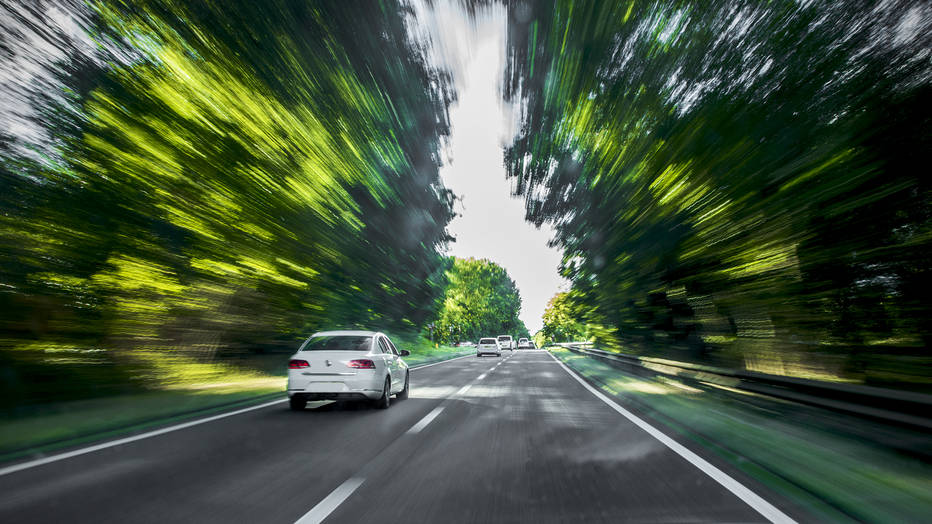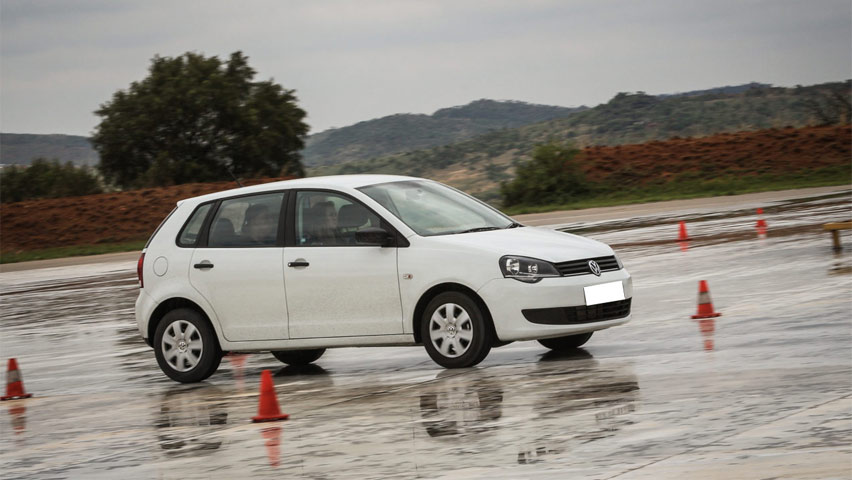
Picture this. November. A back road in Roscommon. It has been raining since Tuesday (it is now Friday). You come into a bend a touch too fast, the back end steps out, and suddenly you are a passenger in your own car.
What you do in the next two seconds decides everything. And unless you have practised, you will do the wrong thing. Most people do.
That is what skid pan training is for. Not the Hollywood version where you drift around corners in slow motion. The real version, where you learn what a loss of grip actually feels like and how to get it back before your car ends up in a field.
The Five Skids You Need to Know
Every skid is different. The fix for one can make another worse. So knowing which type you are dealing with matters.
Wheel Spin
You press the accelerator too hard. The wheels spin faster than the car is actually moving. Traction is gone.
The fix: Ease off the accelerator. Gently. Let the wheels slow down until the rubber grips the road again.
Here is the odd thing. Wheel spin is not always bad. On mud, snow, or ice, a brief spin can clear the muck from under the tyre and help you find grip underneath. But that is a deliberate choice, not a panic reaction.
Oversteer
The back of the car swings out. You are pointing one way, the rear wheels want to go another. This usually happens when you brake too hard going into a turn, shifting weight onto the front tyres and leaving the rears with nothing to hold onto. Common with heavier vehicles and trailers.
The fix: Do not slam the brakes. Accelerate gently to shift weight back onto the rear wheels. Steer into the skid (point the front wheels where you want the car to go, not where it is currently heading).
Understeer
The opposite problem. You turn the steering wheel, but the car keeps going straight. The front tyres have lost grip, usually because you entered the corner too fast.
The fix: Your instinct will be to turn the wheel harder. Ignore that instinct. The answer is in the pedals, not the steering. Ease off the accelerator (or gently apply more, depending on the car) until the front tyres regain grip. Then steer.
Wheel Lock Up
You stamp on the brakes. The wheels stop turning. The car does not stop moving. You are now sliding on four locked tyres like a stone on ice.
The fix: Release the brakes entirely, then reapply them smoothly and progressively. Modern cars with ABS will do this for you automatically (that pulsing feeling in the pedal is the system working, not something breaking). But not every car on Irish roads has ABS, and you need to know the technique regardless.
Counterskid
This is the nasty one. You overcorrect an oversteer skid, and the rear snaps the other way. Then you overcorrect again. Each swing gets worse until you have lost it entirely.
The fix: Stop chasing the rear end. Look where you want to go. Steer smoothly towards your intended path. Small corrections, not wild swings. The key word is smooth.
Why Bother with Skid Pan Training?
You might be thinking: "I drive carefully. I will never skid." Grand. But the road does not care about your plans. Black ice does not send a warning. Diesel spills do not come with signposts. A child running out forces an emergency swerve whether you are ready or not.
You learn what panic feels like (in a safe place). A skid pan lets you experience the lurch, the loss of control, the spike of fear, all without a ditch or an oncoming lorry. When it happens for real, your body has been there before. You react instead of freeze.
You learn to read the car. After a session on the pan, you start noticing things you never did. The way the steering goes light on a wet road. The subtle drift before a full skid develops. These are warnings, and trained drivers catch them early.
You learn that grip is not permanent. Every driver operates on trust. Trust that the tyres will hold, that the road will behave, that physics will cooperate. Skid pan training replaces that blind trust with understanding. You know the limits because you have felt them.
It Is Worth the Day
A skid pan session typically runs a few hours and will cost you less than a new bumper. Several centres around Ireland offer them, and some insurers look favourably on drivers who have done the training.
You will spend most of your driving life never skidding. But the one time you do, on that wet Roscommon road or a frosty motorway slip road in January, you will be very glad you know what to do. Two seconds. That is all you get. Make sure you have practised them.